Walking Together: Sarah’s Caregiving Journey with Her Mom Amy
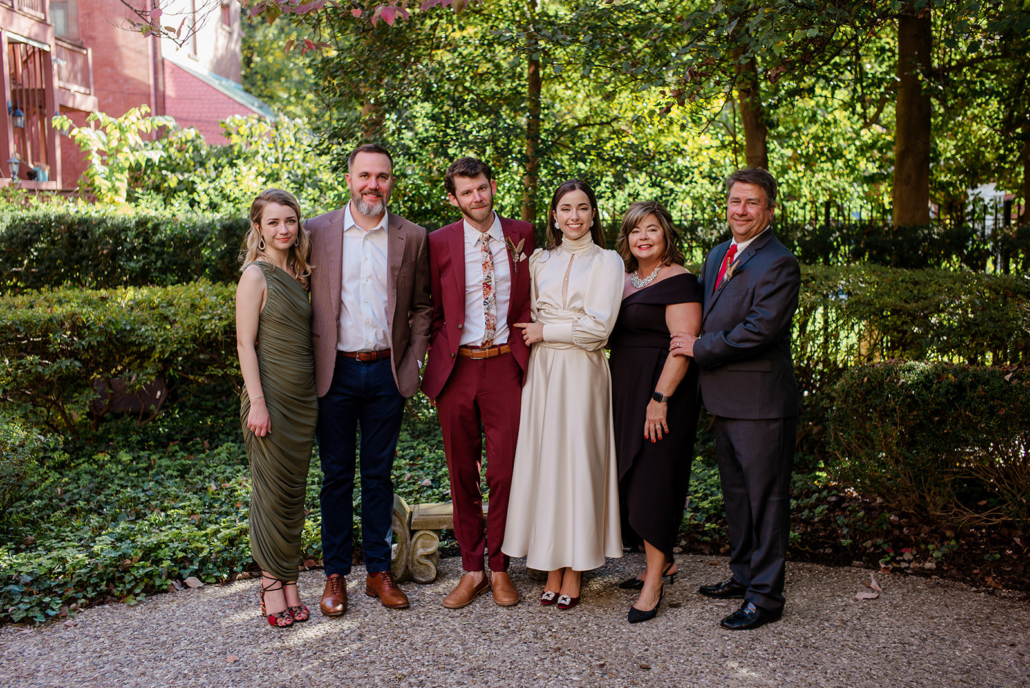
When Sarah Augustyniak thinks about her mother’s cancer journey, she sees it in two distinct chapters. The first began in 2007, when her mother, Amy, was diagnosed with stage 2B breast cancer. Sarah was in middle school, her younger sister even younger, and the family quickly adjusted to a new normal. “I recall it being the first time I was aware that I needed to step up to the plate and help wherever I could,” Sarah said. For her, that meant taking care of her sister while her parents were away at treatment.
The second chapter opened a decade later. After 10 years of remission, Amy’s cancer returned in December 2017, this time metastatic and widespread in her bones. Stage 4. The prognosis: two to five years. Sarah was in graduate school in New York; her sister was in college in Cincinnati. “With a year still to complete my graduate program, I flew home for a long winter holiday to be present and helpful for her surgery and ensuing treatment,” Sarah recalled. But afterward, she returned to school. Life, for a while, went on.
The chemotherapy worked surprisingly well. Amy tolerated her treatment and remained active, defying the bleak timeline doctors had predicted. “We fell into an easy and probably-too-comfortable several years of delaying the inevitable,” Sarah said.
That changed in 2020, when the pandemic reframed Sarah’s sense of distance and time. “We were three years into a two-to-five-year timeline, which I did not find encouraging!” she said. The thought of being 800 miles away while her mom faced an uncertain future became unbearable. In early 2021, Sarah and her partner left New York and moved back to Louisville, determined to be nearby for whatever came next.
Caregiving as Collaboration

Even after her return, Amy continued to defy expectations. She remained on her feet, working, and living fully. But by 2023, the long-running chemotherapy regimen began to fail. Sarah stepped in more deliberately. “Control is something that evades all of us—caregivers and those in active treatments,” she explained. “But giving myself the illusion of control was a huge help.”
From that point forward, Sarah began attending all of her mom’s appointments, every scan and infusion. Mondays became their ritual: oncologist visits, chemotherapy, and then lunch together. The time has been a gift. “This stepping up has done wonders for my relationship with my mom,” Sarah reflected. “It has afforded me time spent with her at a moment where that resource is becoming extremely scarce.”
Sarah describes their relationship as collaborative. They share information, research next steps together, and talk candidly about what lies ahead. “We act as collaborators on research for next steps, for concerns on side effects, and for how to cope with everything as it unfolds,” she said.
Still, there’s an edge of dread to caregiving. “At best, this makes what I’m doing feel a bit like riding a bike with training wheels; at worst, I sometimes feel like a fraud for saying I do any caregiving at all,” Sarah admitted. She knows more demanding days are coming. Recent scans revealed that her mom’s cancer had spread to her brain and liver. Sarah is now preparing to transition her remote work into her parents’ home, ready to step in as her mom’s needs grow.
Finding a Community at Gilda’s Club
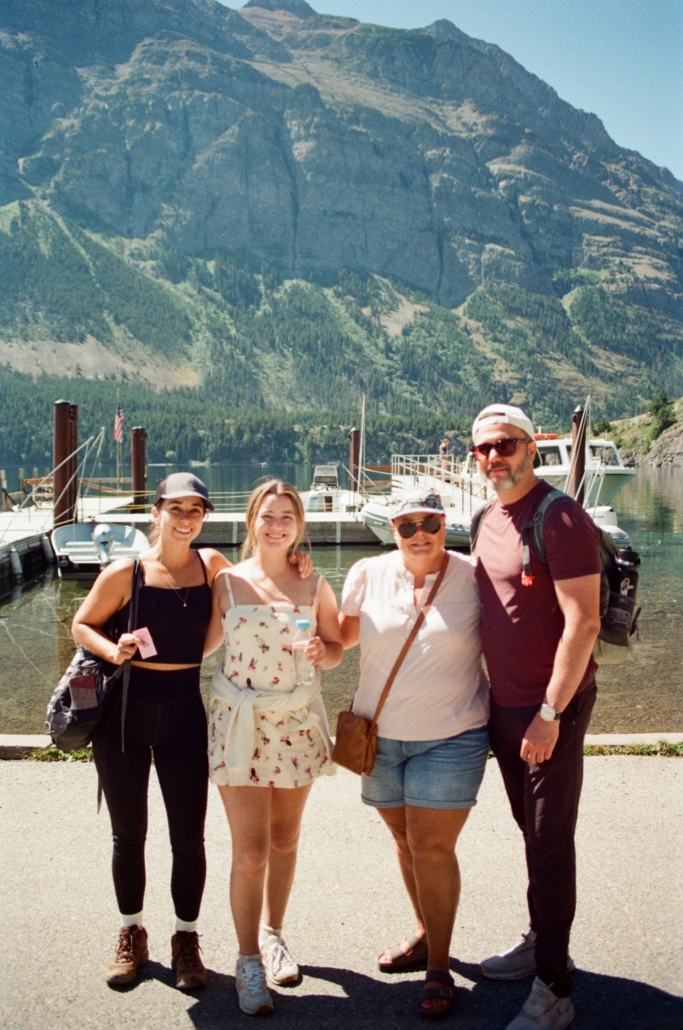
In the summer of 2023, as Sarah was taking a more active role in her mom’s care, Amy’s treatment team connected her with Gilda’s Club Kentuckiana. Amy began attending the metastatic breast cancer support group, while Sarah joined the Friends & Family caregiver group.
For Sarah, the group became a lifeline. Even though she has supportive friends, she hesitates to burden them with the darker realities of her experience. “Things that might be grim or uncomfortable for most people felt casual and commonplace to us,” she said. “Even though their enthusiasm to listen and help never waned, I struggled to shake the feeling that what I shared with them was difficult to hold. Gilda’s offered me something incredibly valuable: the chance to be candid about what we were going through without the worry that what I would say could be too dark or too big.”
She quickly learned that the value of Gilda’s Club was not only in receiving support but also in giving it. “The virtue of the support groups is the network of caring that we create. I can lean on someone because they lean on me, and those relationships make us strong where we need bolstering.”
A Safe Place to Land
Sarah describes herself as an extrovert, someone who thrives in community. The Tuesday caregiver group has become a cornerstone of her week. “I now go through each week knowing that on Tuesdays, if I need to completely fall apart after bad news, there’s a room full of people to catch me,” she said.
She vividly remembers one evening when her mom’s scan results were delayed. The waiting felt unbearable, and Sarah began to spiral. “My group took notice and made sure to check on me and listened so kindly while I fell apart with fear.”
What she has gained is both emotional and practical. “It has also been an incredible pooling of resources and wisdom,” she explained. “No one is walking this path for the first time, and there are many people who have gone ahead of us to learn valuable lessons—lessons that they bring back to each of us. The passing on of this knowledge helps make the next generation’s fight a little easier.”
Coping, Growth, and Gratitude
Routine grounds Sarah, and the rhythm of Gilda’s Club has given her stability. “Coming to Gilda’s every Tuesday has moored me in a new sense of safety and reliability,” she said. The experience has built her confidence in conversations with doctors, strengthened her belief that she can weather the grief to come, and empowered her to support others.
Practical support matters too. Sarah is quick to mention the gift cards for gas provided by Gilda’s Club Kentuckiana to participants in the Active Treatment and Caregiver support groups on Tuesday evenings. The $10 gas card is something that might seem small but is deeply meaningful and appreciated. Driving between her own home in central Louisville and her parents’ house adds up. “Truly, a miracle,” she said. “It makes a big difference to me.”
Additionally, she’s also been delighted by the art on the walls at Gilda’s Grinstead location. “As a person with a degree in fine arts and a lover of painting, I was shocked to discover that Gilda’s Club is in possession of a top-notch art collection! It’s all a treat to see and enjoy.”
Facing Forward
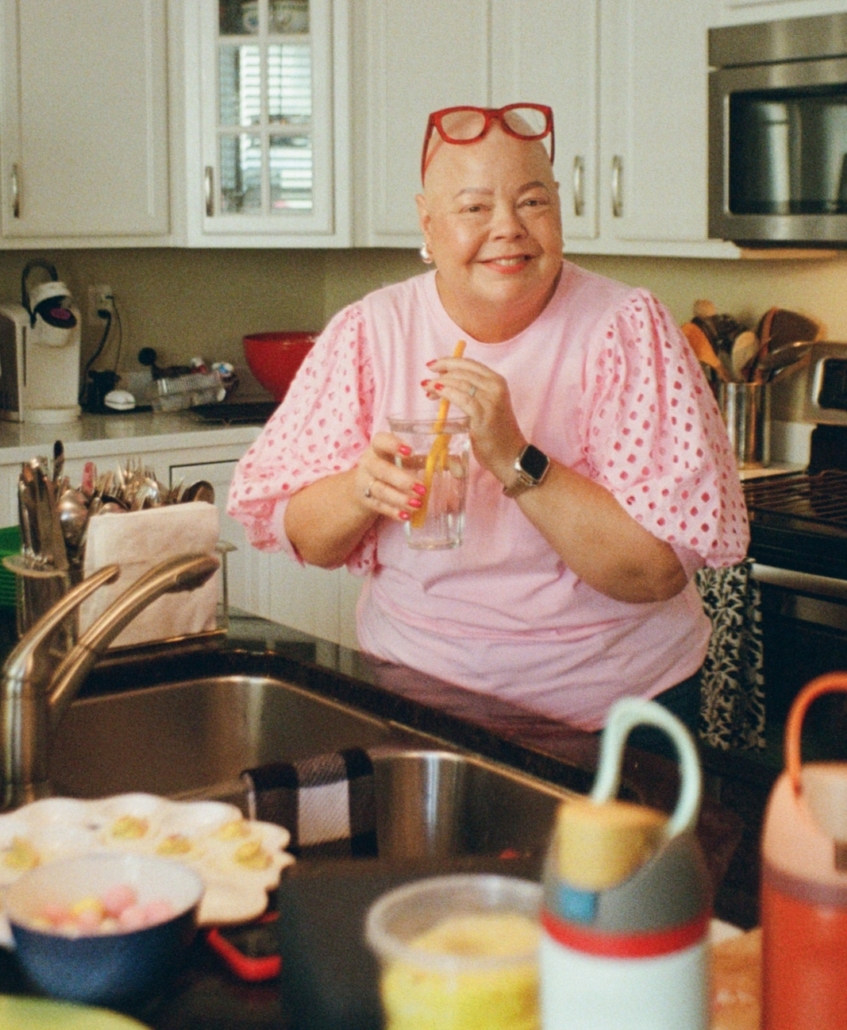
Despite the uncertainties, Sarah holds onto hope—for more time with her mom, for strength to continue supporting her family, and for the sustaining power of community. “Looking forward, I can only hope to continue the give and take needed within my family and within our groups to keep each other moving,” she said.
She is also clear-eyed about what lies ahead. “It is incredibly difficult to watch someone face death. It is so awful to see something like this happen to someone who so desperately wants to live.” Yet, she finds meaning in the role reversal. “This journey means my mother will instead be looking to me for comfort, as she goes through the most difficult thing a person can. For all she has given me in my 31 years, it’s an honor to give her even an ounce of that devotion in return.”
Her message to other caregivers is both practical and heartfelt: “Take notes! Do not be afraid to take up time and space when advocating for medical care and attention. Seek community. Share your feelings. Go for a run when you feel stressed. It’s okay to be angry! But most of all, spend as much time as you can enjoying each other’s company.”
Never Alone
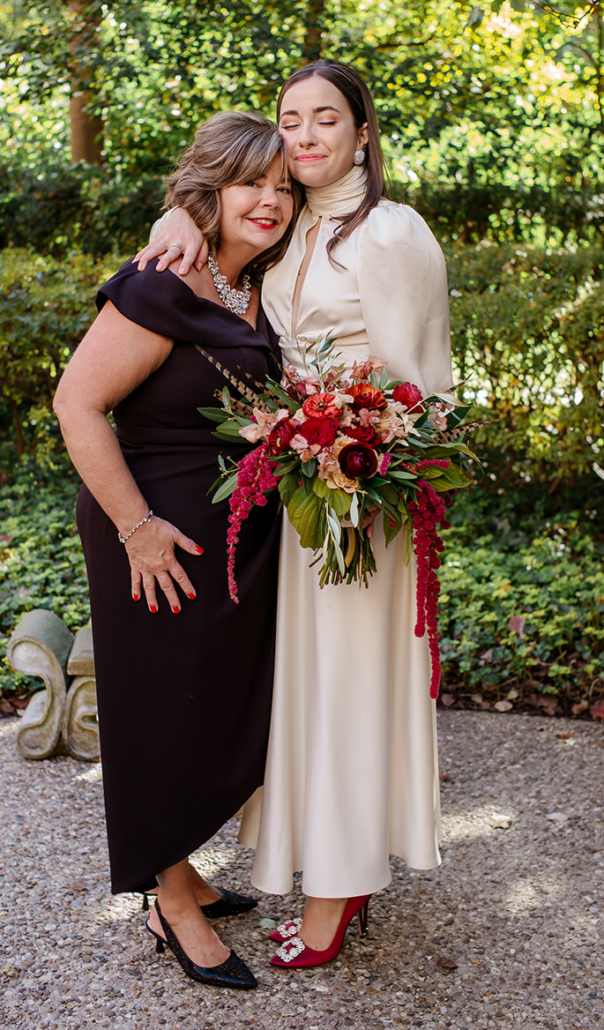
For Sarah, the most important truth is that no one should walk this journey in isolation. “Even though this challenge can feel insurmountable and like the grief is too big to hold, you are never alone,” she said. “When you are fighting cancer, you need every tool possible at your disposal. The Gilda’s Club community has been invaluable to me. Take the chance and put yourself out there, even if the idea of sitting with strangers feels imposing or impossible. Everyone attending wants to help you succeed.”
Sarah and her mother have been beating the odds for years. Through cycles of illness and wellness, through the illusion of control and the reality of change, they’ve walked this path together. And thanks to Gilda’s Club, they know that however unpredictable the road ahead may be, they will not walk it alone.
Gilda’s Club Kentuckiana offers free cancer support programs at four convenient locations and online. All services are provided at no cost to participants so that no one faces cancer alone. Our inclusive, welcoming community is open to anyone affected by cancer: those in active treatment, survivors, caregivers, friends and family, and those grieving a cancer-related loss. Get the support you need by filling out this simple form, submitting a Contact form for general questions or calling 502.583.0075 to schedule a tour of the Gilda’s Club site closest to you.