
Gilda’s Club Kentuckiana provides free cancer support groups, education, and community for people in active treatment, survivors, caregivers, and families across Kentucky and Southern Indiana. For Bob and his wife Sue, that support made the difference between feeling isolated after a lung cancer diagnosis and feeling understood, connected, and hopeful.
Gilda’s Club helped Bob move from shock and isolation to connection and purpose—surrounding him and his wife with a community that truly understood the weight of cancer and refused to let them carry it alone.
When Bob heard the word “malignant,” his life split into a before and an after. A healthy, active 70-year-old grandfather, educator, mentor, and volunteer, he suddenly found himself in a world of ports, pathology reports, chemotherapy, and uncertainty. Yet what could have been a lonely, frightening road became something different—because Bob and his wife, Sue, found their way to Gilda’s Club.
There, in a circle of strangers who quickly became friends, Bob discovered what it means to be fully seen in the midst of cancer. He found language for the invisible burdens he carried. Sue found support as a caregiver navigating her own quiet fears. And together, they experienced the power of a mission lived out daily: so no one faces cancer alone.
Life Before Lung Cancer
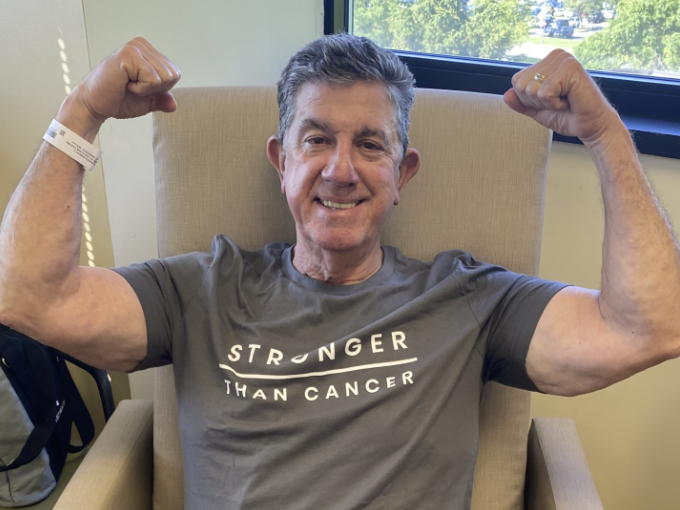 Bob is, at heart, a builder of people and communities. He spent most of his career in education—teaching and serving as a school administrator within Jefferson County Public Schools. Even in retirement, he couldn’t quite step away from meaningful work. He consults on school safety assessments across Kentucky, helping keep students safe. He mentors. He volunteers.
Ask him what he’s most proud of, though, and he won’t mention awards or titles. He’ll talk about his family. His wife, Sue—a recently retired operating room nurse of more than four decades. His two grown children and their spouses. His three grandchildren, who know him as Papaw.
“I know with 100% certainty,” Bob says, “that my family will be the best evidence that I made this world a better place.”
Retirement was supposed to be their season of joy—time with grandchildren, travel, laughter.
Then came a routine CT scan.
The Shock of a Lung Cancer Diagnosis
The nodule in his left lung didn’t initially seem alarming. It would be monitored. It might be nothing.
Six months later, it had doubled in size.
Within days, Bob underwent an ion bronchoscopy. He remembers waking from the procedure and hearing just one word: “malignant.”
“Immediately, my life changed and the hurricane began,” he says.
Surgery followed quickly. The lower lobe of his left lung was removed. The operation went well. Then the pathology report returned: a positive lymph node.
Another shock.
Suddenly, this strong, capable man who had spent decades looking out for others was staring at his own mortality. He would need chemotherapy and immunotherapy. A port would be placed in his chest. Treatment would begin.
“Chemo… me?” he recalls thinking.
Cancer had turned him from provider and protector to patient. From helper to the one needing help.
Why Newly Diagnosed Cancer Patients Often Feel Alone
One of the strangest parts of cancer, Bob says, is how invisible it can be.
He looked healthy. He felt mostly okay—at least at first. Friends and acquaintances often gauged his condition by his appearance.
“No one in my life could possibly know what I was feeling,” he says. “They just did not know beyond what they could see.”
Inside, though, he felt as if he were in a tunnel. Alone. Carrying what he later described as a “600-pound invisible gorilla”—the mental and emotional weight of cancer.
Talking helped. But something was still missing: connection with people who truly understood life during cancer treatment.
That’s when he noticed Gilda’s Club in a resource packet from his oncology office.
How Cancer Support Groups Help During Treatment
Bob had long believed in the power of groups. So he made the call.
“The person who answered the phone at Gilda’s Club made me feel like family,” he says.
Soon, he was assigned to a support group for individuals in active cancer treatment. On his first Tuesday evening, he walked into Babwa’s Room and took a seat in a circle in a group room arranged like a comfortable living room.
A dozen people. Men and women. Different ages. Different diagnoses. One shared reality.
Cancer.
There were tears. Laughter. Hugs.
When it was Bob’s turn, he struggled to speak.
“Nothing in life prepares you for these types of things,” he says.
But as he spoke, he felt something else: understanding.
“I felt from the beginning that I was no longer alone,” he says. “They had my back like no one else.”
Week after week, that bond deepened.
Learn More About Our Free Program of Cancer Support
The Mental and Emotional Impact of Cancer
In group, Bob began to reflect on something deceptively simple: the question, “How are you feeling today?”
Before cancer, it had often functioned as a casual greeting. Now, it carried weight.
Cancer’s physical side effects were real and exhausting. But the mental burden could be heavier still.
Bob refers to that weight as “my invisible 600-pound gorilla.”
In that circle, Bob and his fellow group members lifted one another’s invisible gorillas. They spoke openly about fear, fatigue, frustration, and hope. They normalized emotions that felt overwhelming elsewhere.
“In retrospect,” Bob says, “I cannot imagine traveling that road without my Gilda’s brothers and sisters.”
Support for Cancer Caregivers Matters, Too
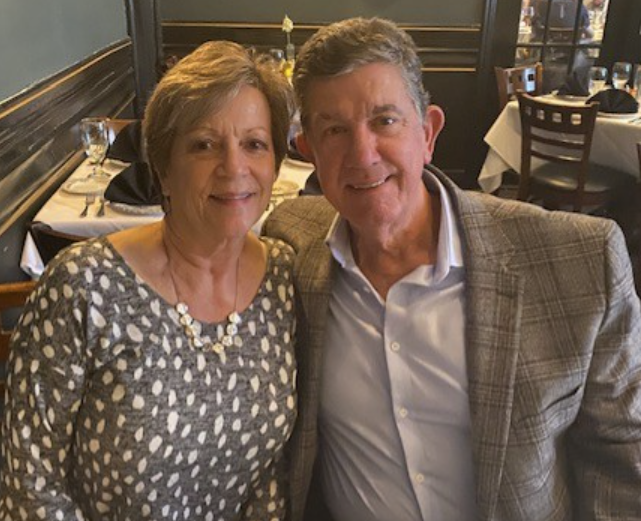 Cancer does not affect one person alone. It reverberates through families.
Bob encouraged his wife, Sue, to attend Gilda’s caregiver support group. After 46-½ years as a nurse, she had seen almost everything in a clinical setting. But she had never been married to someone in active cancer treatment.
Caregivers often focus so fully on their loved one that their own needs go unnoticed.
In her group, Sue found peers navigating similar terrain. She found space to process. To exhale. To be supported rather than solely supportive.
At Gilda’s Club Kentuckiana, caregivers have their own support groups—because serious illness touches the whole family.
From Cancer Patient to Volunteer
Over time, Bob transitioned from a Wellness support group for those in active treatment into the Beyond Cancer group for survivors.
He began to reclaim his energy and rhythm.
And then he did what builders of community do.
He gave back.
Today, Bob volunteers at Gilda’s Club, often serving as a greeter—the first face someone sees when they walk through the door, or the first voice they hear on the phone.
He knows the courage it takes to say, “I have cancer.”
He also knows what waits on the other side of that courage: connection, understanding, and hope.
For Bob, volunteering is gratitude in action.
Free Cancer Support So No One Faces Cancer Alone
From that first phone call, Bob recognized something special about the culture at Gilda’s Club Kentuckiana: Inclusion, Compassion, Empathy, and Love.
The mission statement posted near the door reads: Free Cancer Support So No One Faces Cancer Alone.
For Bob and Sue, those words became reality.
For others newly diagnosed with cancer, searching for support, wondering what to do next, it can become reality, too.
Sign Up for Our Monthly e-News
Get more community stories, event highlights, and Clubhouse news delivered to your inbox.
What to Do After a Cancer Diagnosis
If you or a loved one has been newly diagnosed with cancer, consider these steps:
Pause and breathe. It’s normal to feel shock or fear.
Learn about your diagnosis. Ask your doctor questions and take notes.
Bring someone to appointments. A second set of ears helps.
Build a support system. Family, friends, and support groups matter.
Seek emotional support early. Mental health is as important as physical care.
Connect with a cancer support organization. Free groups can reduce isolation and provide community.
Free cancer support is available through Gilda’s Club Kentuckiana for patients, caregivers, and families in Kentucky and Southern Indiana.
FAQ
What should I do after being diagnosed with cancer?
After a cancer diagnosis, focus on understanding your treatment plan, building a support system, asking questions, and seeking emotional support through cancer support groups.
Are there free cancer support groups in Kentucky and Southern Indiana?
Yes. Gilda’s Club Kentuckiana offers free cancer support groups, education, and resources for people in treatment, survivors, caregivers, and families.
How do cancer support groups help during treatment?
Cancer support groups reduce isolation, provide emotional support, normalize difficult feelings, and connect patients with others who understand life during treatment.
Do caregivers need support during cancer treatment?
Yes. Caregivers often experience emotional stress and fatigue. Dedicated caregiver support groups provide space to process, connect, and receive encouragement.
Is Gilda’s Club only for cancer patients?
No. Gilda’s Club Kentuckiana serves people in active treatment, survivors, caregivers, those grieving a cancer-related loss, and family members.
What to Do After a Cancer Diagnosis
If you or a loved one has been newly diagnosed with cancer, consider these steps:
Pause and breathe. It’s normal to feel shock or fear.
Learn about your diagnosis. Ask your doctor questions and take notes.
Bring someone to appointments. A second set of ears helps.
Build a support system. Family, friends, and support groups matter.
Seek emotional support early. Mental health is as important as physical care.
Connect with a cancer support organization. Free groups can reduce isolation and provide community.
Free cancer support is available through Gilda’s Club Kentuckiana for patients, caregivers, and families in Kentucky and Southern Indiana.
FAQ
What should I do after being diagnosed with cancer?
After a cancer diagnosis, focus on understanding your treatment plan, building a support system, asking questions, and seeking emotional support through cancer support groups.
Are there free cancer support groups in Kentucky and Southern Indiana?
Yes. Gilda’s Club Kentuckiana offers free cancer support groups, education, and resources for people in treatment, survivors, caregivers, and families.
How do cancer support groups help during treatment?
Cancer support groups reduce isolation, provide emotional support, normalize difficult feelings, and connect patients with others who understand life during treatment.
Do caregivers need support during cancer treatment?
Yes. Caregivers often experience emotional stress and fatigue. Dedicated caregiver support groups provide space to process, connect, and receive encouragement.
Is Gilda’s Club only for cancer patients?
No. Gilda’s Club Kentuckiana serves people in active treatment, survivors, caregivers, those grieving a cancer-related loss, and family members.
Gilda’s Club Kentuckiana provides free cancer support groups, education, and community for people in active treatment, survivors, caregivers, and families across Kentucky and Southern Indiana. For Bob and his wife Sue, that support made the difference between feeling isolated after a lung cancer diagnosis and feeling understood, connected, and hopeful.
Gilda’s Club helped Bob move from shock and isolation to connection and purpose—surrounding him and his wife with a community that truly understood the weight of cancer and refused to let them carry it alone.
When Bob heard the word “malignant,” his life split into a before and an after. A healthy, active 70-year-old grandfather, educator, mentor, and volunteer, he suddenly found himself in a world of ports, pathology reports, chemotherapy, and uncertainty. Yet what could have been a lonely, frightening road became something different—because Bob and his wife, Sue, found their way to Gilda’s Club.
There, in a circle of strangers who quickly became friends, Bob discovered what it means to be fully seen in the midst of cancer. He found language for the invisible burdens he carried. Sue found support as a caregiver navigating her own quiet fears. And together, they experienced the power of a mission lived out daily: so no one faces cancer alone.
Life Before Lung Cancer
Bob is, at heart, a builder of people and communities. He spent most of his career in education—teaching and serving as a school administrator within Jefferson County Public Schools. Even in retirement, he couldn’t quite step away from meaningful work. He consults on school safety assessments across Kentucky, helping keep students safe. He mentors. He volunteers.
Ask him what he’s most proud of, though, and he won’t mention awards or titles. He’ll talk about his family. His wife, Sue—a recently retired operating room nurse of more than four decades. His two grown children and their spouses. His three grandchildren, who know him as Papaw.
“I know with 100% certainty,” Bob says, “that my family will be the best evidence that I made this world a better place.”
Retirement was supposed to be their season of joy—time with grandchildren, travel, laughter.
Then came a routine CT scan.
The Shock of a Lung Cancer Diagnosis
The nodule in his left lung didn’t initially seem alarming. It would be monitored. It might be nothing.
Six months later, it had doubled in size.
Within days, Bob underwent an ion bronchoscopy. He remembers waking from the procedure and hearing just one word: “malignant.”
“Immediately, my life changed and the hurricane began,” he says.
Surgery followed quickly. The lower lobe of his left lung was removed. The operation went well. Then the pathology report returned: a positive lymph node.
Another shock.
Suddenly, this strong, capable man who had spent decades looking out for others was staring at his own mortality. He would need chemotherapy and immunotherapy. A port would be placed in his chest. Treatment would begin.
“Chemo… me?” he recalls thinking.
Cancer had turned him from provider and protector to patient. From helper to the one needing help.
Why Newly Diagnosed Cancer Patients Often Feel Alone
One of the strangest parts of cancer, Bob says, is how invisible it can be.
He looked healthy. He felt mostly okay—at least at first. Friends and acquaintances often gauged his condition by his appearance.
“No one in my life could possibly know what I was feeling,” he says. “They just did not know beyond what they could see.”
Inside, though, he felt as if he were in a tunnel. Alone. Carrying what he later described as a “600-pound invisible gorilla”—the mental and emotional weight of cancer.
Talking helped. But something was still missing: connection with people who truly understood life during cancer treatment.
That’s when he noticed Gilda’s Club in a resource packet from his oncology office.
How Cancer Support Groups Help During Treatment
Bob had long believed in the power of groups. So he made the call.
“The person who answered the phone at Gilda’s Club made me feel like family,” he says.
Soon, he was assigned to a support group for individuals in active cancer treatment. On his first Tuesday evening, he walked into Babwa’s Room and took a seat in a circle in a group room arranged like a comfortable living room.
A dozen people. Men and women. Different ages. Different diagnoses. One shared reality.
Cancer.
There were tears. Laughter. Hugs.
When it was Bob’s turn, he struggled to speak.
“Nothing in life prepares you for these types of things,” he says.
But as he spoke, he felt something else: understanding.
“I felt from the beginning that I was no longer alone,” he says. “They had my back like no one else.”
Week after week, that bond deepened.
Learn More About Our Free Program of Cancer Support
The Mental and Emotional Impact of Cancer
In group, Bob began to reflect on something deceptively simple: the question, “How are you feeling today?”
Before cancer, it had often functioned as a casual greeting. Now, it carried weight.
Cancer’s physical side effects were real and exhausting. But the mental burden could be heavier still.
Bob refers to that weight as “my invisible 600-pound gorilla.”
In that circle, Bob and his fellow group members lifted one another’s invisible gorillas. They spoke openly about fear, fatigue, frustration, and hope. They normalized emotions that felt overwhelming elsewhere.
“In retrospect,” Bob says, “I cannot imagine traveling that road without my Gilda’s brothers and sisters.”
Support for Cancer Caregivers Matters, Too
Cancer does not affect one person alone. It reverberates through families.
Bob encouraged his wife, Sue, to attend Gilda’s caregiver support group. After 46-½ years as a nurse, she had seen almost everything in a clinical setting. But she had never been married to someone in active cancer treatment.
Caregivers often focus so fully on their loved one that their own needs go unnoticed.
In her group, Sue found peers navigating similar terrain. She found space to process. To exhale. To be supported rather than solely supportive.
At Gilda’s Club Kentuckiana, caregivers have their own support groups—because serious illness touches the whole family.
From Cancer Patient to Volunteer
Over time, Bob transitioned from a Wellness support group for those in active treatment into the Beyond Cancer group for survivors.
He began to reclaim his energy and rhythm.
And then he did what builders of community do.
He gave back.
Today, Bob volunteers at Gilda’s Club, often serving as a greeter—the first face someone sees when they walk through the door, or the first voice they hear on the phone.
He knows the courage it takes to say, “I have cancer.”
He also knows what waits on the other side of that courage: connection, understanding, and hope.
For Bob, volunteering is gratitude in action.
Free Cancer Support So No One Faces Cancer Alone
From that first phone call, Bob recognized something special about the culture at Gilda’s Club Kentuckiana: Inclusion, Compassion, Empathy, and Love.
The mission statement posted near the door reads: Free Cancer Support So No One Faces Cancer Alone.
For Bob and Sue, those words became reality.
For others newly diagnosed with cancer, searching for support, wondering what to do next, it can become reality, too.
Sign Up for Our Monthly e-News
Get more community stories, event highlights, and Clubhouse news delivered to your inbox.